Booking choice: The small-group luxury catamaran. Book this Tour details
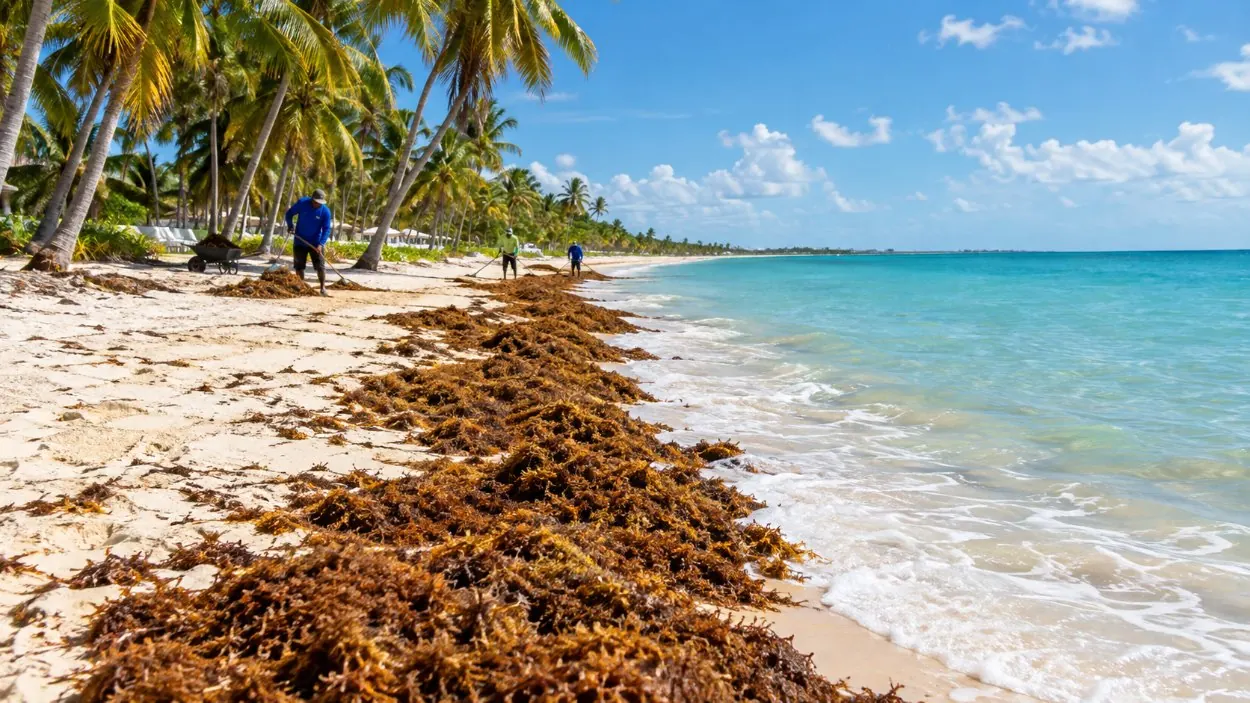
Sargassum is a floating brown seaweed that drifts in from the Atlantic in huge mats. At sea it is mostly a curiosity. On a beach it piles up, turns brown and, as it rots, smells of rotten eggs.
2026 was a heavy year. This post sums up what scientists and the Dominican press reported, which coasts took the brunt, and how much of it touches a Saona day trip.
The quick answer
The University of South Florida recorded record-high sargassum in the Caribbean in June 2026, and the year is set to be at least the second largest on record. Punta Cana and Bávaro saw some of the heaviest landings. The Bayahibe hotel association says Saona shields Bayahibe and turns the weed west. Amounts fell sharply in August and September, and USF expected the decline to continue until about November.
How bad is sargassum in the Caribbean in 2026?
Very bad by historical standards. USF reported record-high amounts in the Caribbean Sea for June, and 2026 is set to be at least the second-largest sargassum year.
The Optical Oceanography Lab at the University of South Florida (USF) publishes a monthly sargassum outlook built from satellite data. Its 30 June 2026 bulletin says the Caribbean Sea "continued to show record-high Sargassum amount for the month of June", and that 2026 is "set to be at least the second largest Sargassum year", behind 2025.
The Dominican press put that into numbers. Dominican Today cited USF figures of about 9 million metric tons in the Caribbean from January to June 2026, against 8.3 million in the same months of 2025 and 1.2 million in 2024.
| Year | Caribbean sargassum, January to June | Change |
|---|---|---|
| 2024 | About 1.2 million metric tons | A light year |
| 2025 | About 8.3 million metric tons | The record year |
| 2026 | About 9 million metric tons | Ahead of 2025 at mid-year |
Which Dominican beaches got sargassum in 2026?
The east coast resorts around Punta Cana and Bávaro had some of the heaviest landings. Boca Chica and Playa Rincón in Samaná also needed cleanups.
In July, Revista Mercado reported that "Punta Cana y Bávaro concentran parte de las mayores acumulaciones" this season: the two hold some of the largest piles. Beachfront hotels there clear their sand every day with tractors. Public stretches wait longer, because they lack the resources to keep up.
Elsewhere, the Ministry of Tourism handed 42 pieces of heavy equipment to Boca Chica, east of Santo Domingo, in June, including six beach sweepers. It also coordinated a cleanup at Playa Rincón in Samaná, and on 9 September the Ministry of Environment announced a national operation in the eastern region to inspect cleaning protocols, according to El Inmobiliario.
Does sargassum reach Saona Island and Bayahibe?
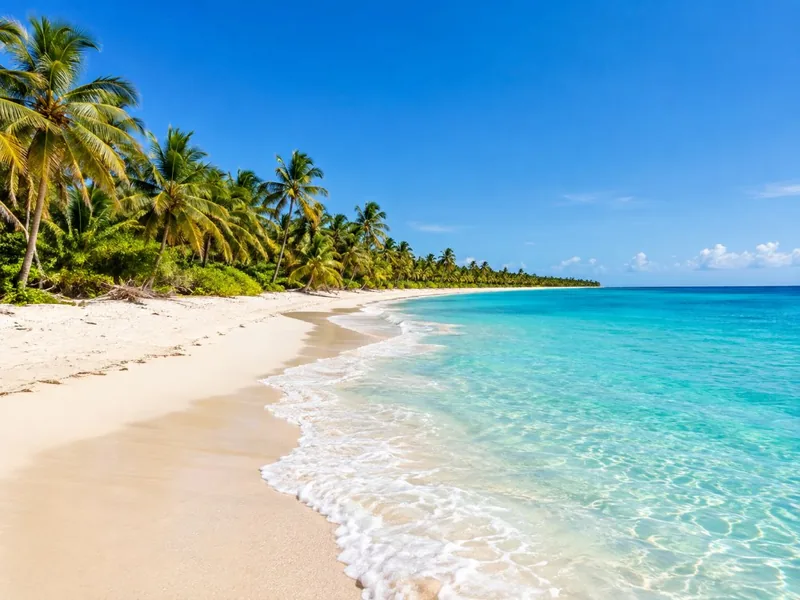
Less than the east coast, according to the Bayahibe hotels. Their association says the weed hits Saona and turns west, towards Juan Dolio.
In May 2026 Andrés Fernández, president of the La Romana-Bayahibe hotel association, told El Inmobiliario that sargassum arriving through the Mona Passage "choca con la Saona y se desvía hacia San Pedro de Macorís, Juan Dolio y la zona oeste de la isla". In English: it hits Saona and turns towards San Pedro de Macorís, Juan Dolio and the west of the country, leaving the beaches of Bayahibe alone. He credited "el rol protector de la isla Saona".
Two caveats. A hotel association has every reason to sound upbeat. And in his own telling, the weed hits Saona first. Beach-level reports for Saona itself are scarce, so treat the island as exposed on some days, and ask your operator if you are travelling in a heavy month.
Start in Bayahibe: the small-group catamaran sails from there, with a snorkel stop and no loud music on the way back.
Book thisWill sargassum spoil the natural pool or the boat trip?
It is a beach problem more than a boat problem. Floating mats can drift past at sea, and operators may change the stops when conditions call for it.
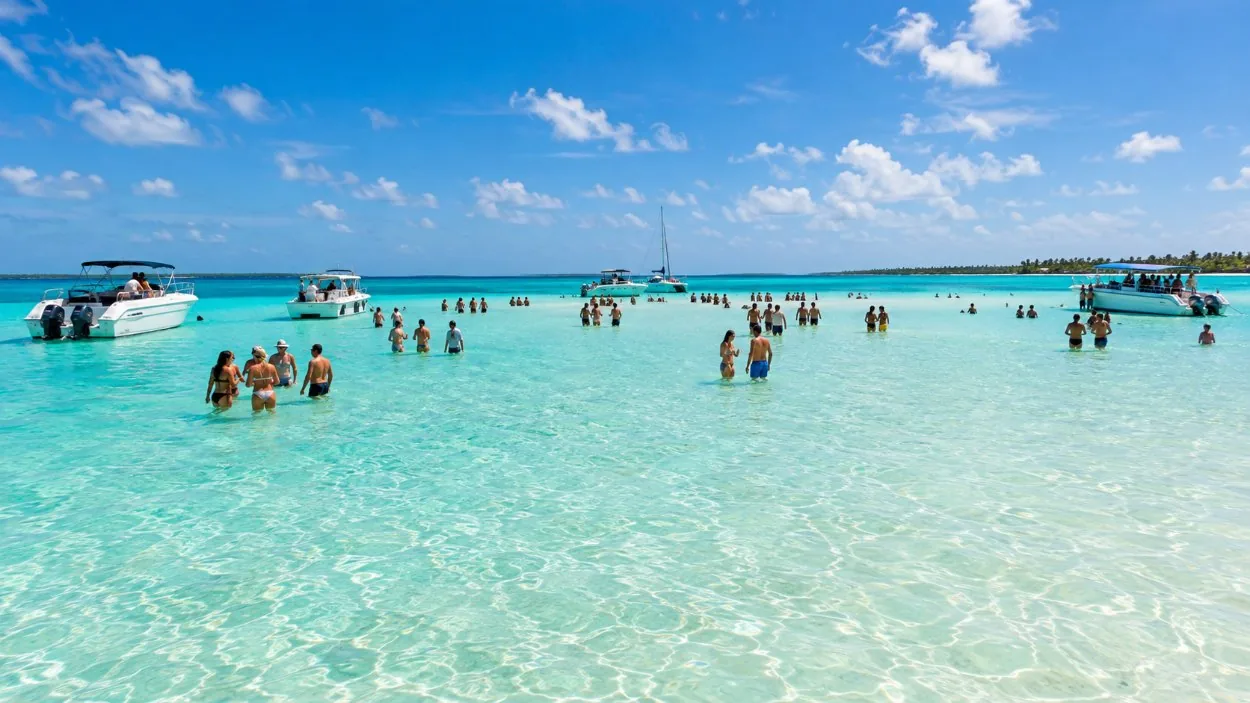
The natural pool is a sandbar in open water, and the boats can move. A hotel beach cannot. Operators already say the boat type or the order of stops may change with sea conditions, and the same flexibility helps when weed drifts in.
If you do meet sargassum, keep out of thick mats in the water. The Florida Department of Health notes that the seaweed does not sting, but tiny organisms living in it, like jellyfish larvae, "may irritate the skin". Rotting weed on shore gives off hydrogen sulfide, which can irritate the eyes, nose and throat, and people with asthma or other breathing problems are advised to limit their time on affected beaches.
What is the sargassum outlook for winter 2026-27?
Falling. USF's 30 September bulletin saw amounts decline in every region and expected that to continue until about November, with lighter beaching than in summer.
The September bulletin says the total "continued to decline in September". The amount in the main sargassum belt halved from August, after halving from July, a drop the authors call consistent with previous years. Beaching around the Caribbean continues, but USF expects it to be lighter than in the summer months.
Totals were still high by historical standards at the end of September. The outlook stops at November, and USF stresses that its bulletins are general outlooks, not forecasts for a given beach. For a trip between December and April the signs are good. They are not a promise.
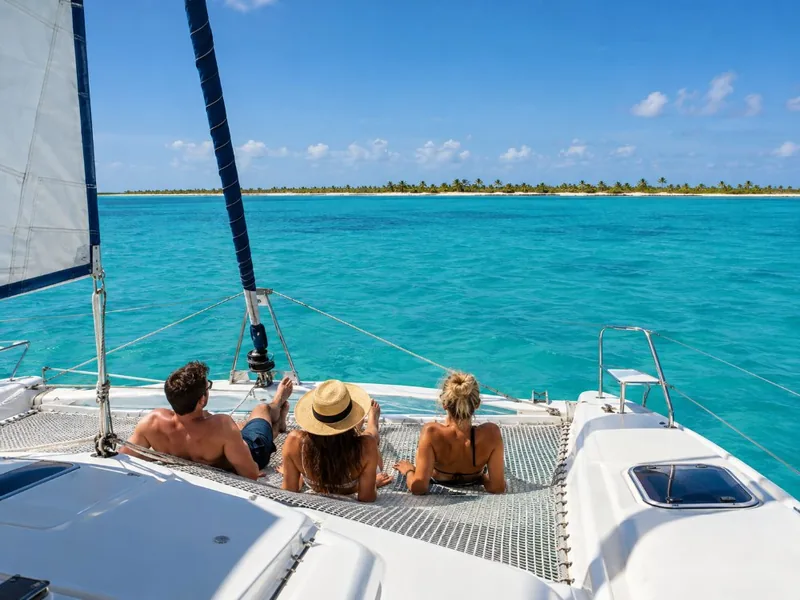
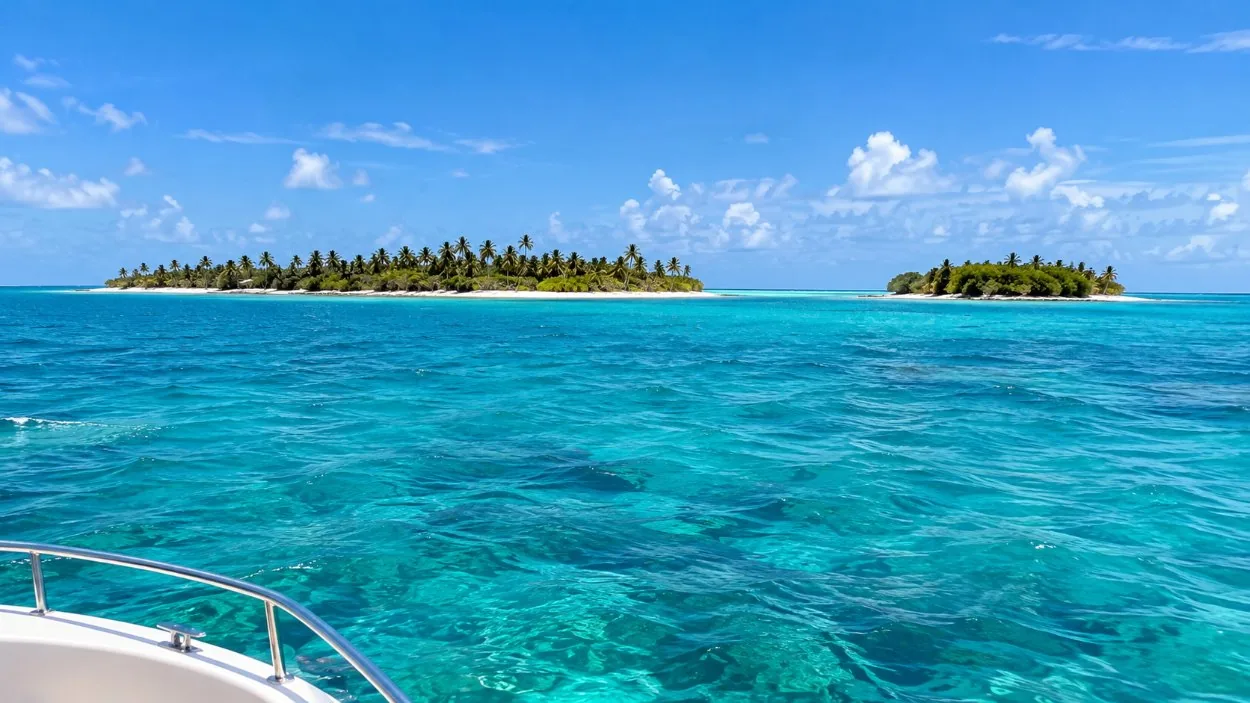
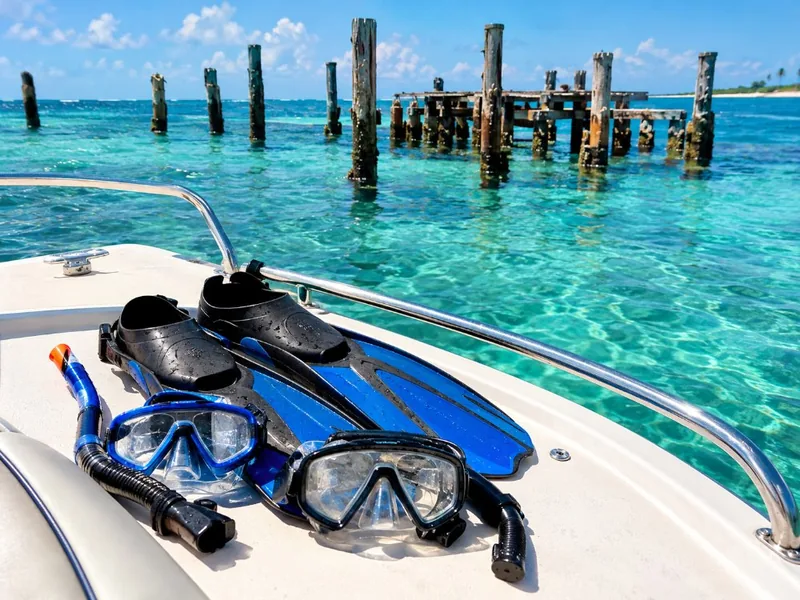
A small-group catamaran from Bayahibe: snorkelling at the old Catuano pier, a quieter beach corner, lunch on board and the natural pool.
Book this Tour detailsHow can you check sargassum before a Saona trip?
Read the monthly USF outlook for the big picture, the local maps for the coast, and ask your operator the day before.
Three sources are worth a bookmark. The USF bulletins cover the whole Caribbean once a month. Sargassum Monitoring's Dominican Republic page gathers satellite maps, including one from the Dominican government and ANAMAR that is valid for a few days at a time. And your operator sees the coast every morning.
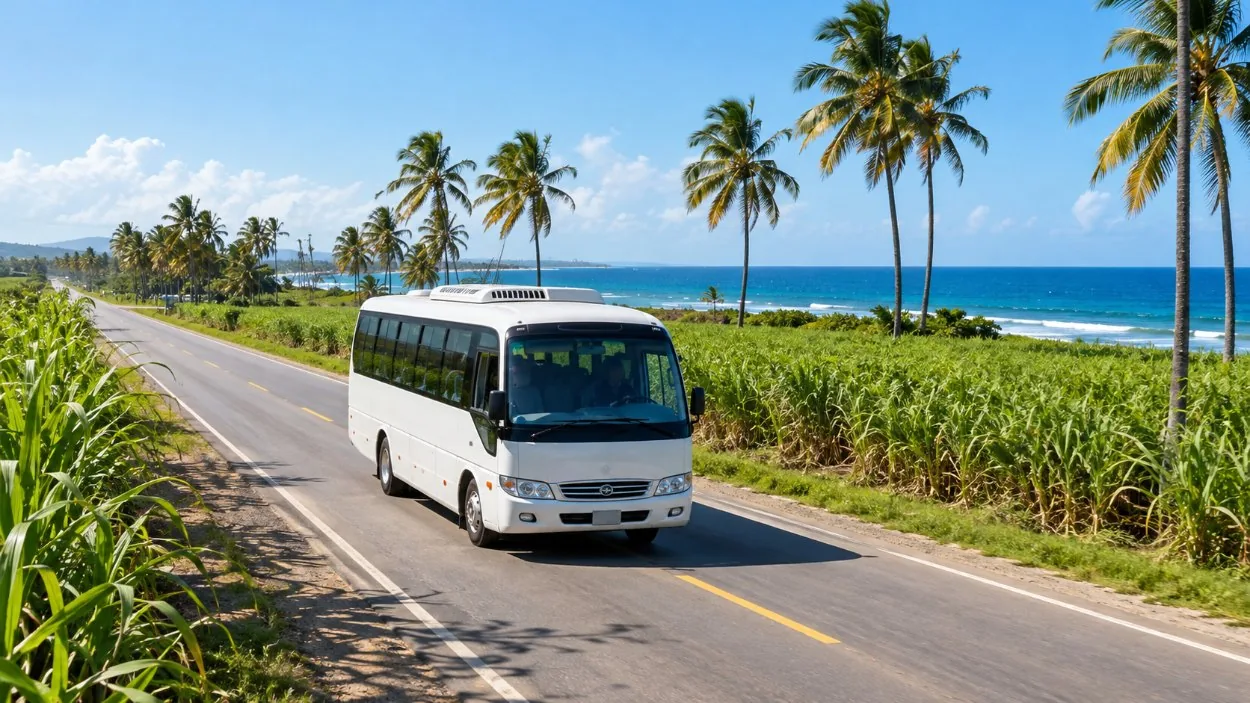
If your hotel beach in Punta Cana has weed, that says little about Saona. The trip starts with a bus to Bayahibe, on the south coast, and every tour here cancels free up to 24 hours before. Our Punta Cana to Saona guide covers the journey.
| Source | What it shows | How often |
|---|---|---|
| USF Optical Oceanography Lab | Sargassum amounts across the Caribbean and the Gulf | Monthly bulletin |
| Sargassum Monitoring, Dominican Republic | Satellite maps and a short-term outlook for the coast | Several updates a week |
| Your tour operator | Conditions at the pool and the beach that day | Daily |
Frequently asked questions
Is there sargassum on Saona Island?
Sometimes, in heavy years. The Bayahibe hotel association says the weed hits Saona and turns west, which keeps it off Bayahibe. Beach-level reports for Saona are scarce, so ask your operator before you go.
When is sargassum season in the Dominican Republic?
The worst landings come in the warmer months. In 2026 the Caribbean total hit a record in June, then fell sharply in August and September, and USF expected the decline to continue until about November.
Is Punta Cana affected by sargassum in 2026?
Yes. Punta Cana and Bávaro had some of the largest accumulations this season. Hotels clear their beaches daily; public stretches take longer.
Is it safe to swim near sargassum?
The seaweed does not sting, but tiny organisms living in it can irritate the skin, so avoid swimming through thick mats. Rotting weed on shore releases hydrogen sulfide, which can bother people with asthma.
Ready to book
Choose your tour
Free cancellation up to 24 hours before on every option.
Small-Group Saona Day on a Luxury Catamaran
- Sailing catamaran from Bayahibe, back around 5 p.m.
- Snorkel stop at the Catuano pier, gear included
- About 1.5 hours on a quieter beach with loungers
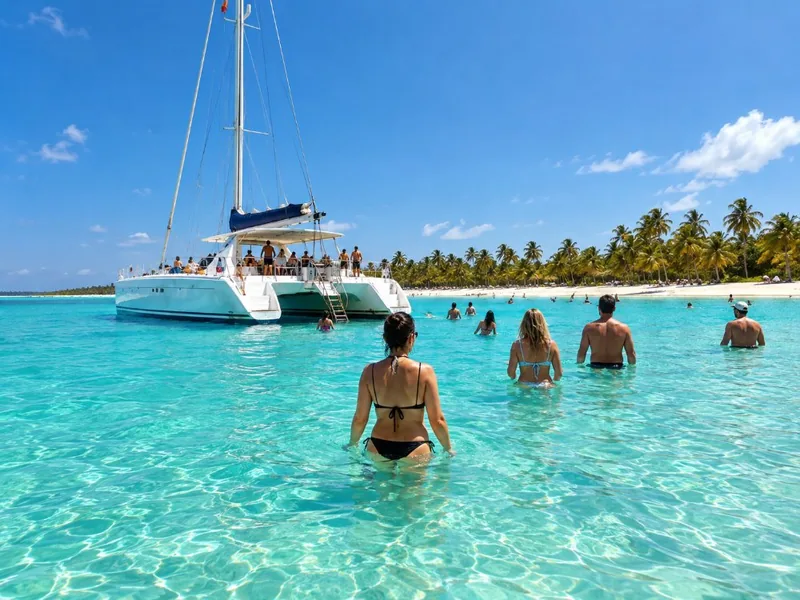
Saona by Speedboat & Catamaran with Buffet
- Hotel pickup in Bávaro or Bayahibe
- Speedboat out, catamaran back
- Natural pool stop, about 40 minutes
Beaches, Mangroves & Natural Pool by Speedboat
Mangroves, a snorkel stop and the pool, all by speedboat